EI Australia brings significant specialist capability in assessment and remediation of both up and downstream oil and gas assets. The extensive hands-on experience of our senior technical team is showcased below.
100+ Downstream Petroleum Sites | USA & Asia-Pacific
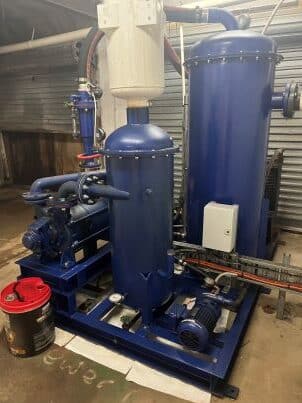
Brendan Brodie, Technical Director for EI Australia, has provided technical leadership in the assessment and remediation of service stations, fuel depots and refineries across four countries. Experience includes emergency spill response, remediation design and costing, construction oversight, site validation and environmental litigation support. Hands-on design and fabrication of treatment and chemical injection systems complement extensive experience with vapour extraction, air sparging, ISCO, bioremediation and groundwater treatment.
ADVANCED CHARACTERISATION • 2019–2020
Ampol Kurnell Terminal | NSW, Australia
Pedro Balbachevsky, Principal Environmental Engineer for EI Australia, led field investigations, interpretation and reporting for a major petroleum assessment within a terminal tank farm. High-resolution tools (MIP, HPT and LIF) were combined with Natural Source Zone Depletion (NSZD) assessment using passive CO₂ flux traps and subsurface biogenic heat monitoring. The investigation identified how subsurface geology influenced petroleum contaminant distribution, informing future remediation strategies.
EI Australia’s laboratory subsidiary, Scientifica, provides ISO/IEC 17025-accredited analytical services supporting contaminated land assessment, remediation and environmental technology development. Laboratory Director David Burns brings 35 years of environmental chemistry experience, particularly testing petroleum-impacted soil and groundwater from service stations, fuel depots and refineries. His previous laboratory business held BP’s East Coast Australia analytical services contract from 1998 to 2002.
INTEGRATED REMEDIATION • SOIL REUSE
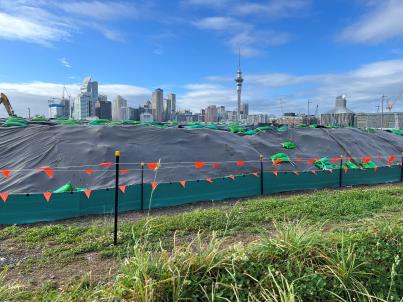
Petroleum Depot & Chemical Facility | Auckland, New Zealand
Led remediation strategy, detailed design and technical oversight following closure of a major petroleum storage and chemical production facility. The integrated program combined targeted excavation, on-site soil bioremediation, in-situ chemical oxidation and metals immobilisation. Treated soils were reused on-site, reducing off-site disposal and supporting redevelopment as recreational open space.
PFAS INNOVATION • 2021–2026
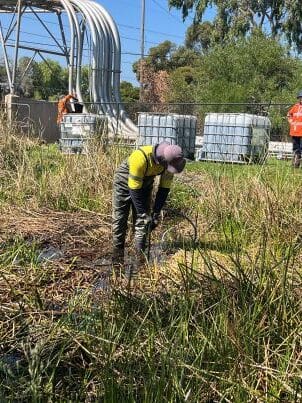
In-Situ PFAS Remediation | Fuel Depot Wetlands, Victoria
Designed and implemented an in-situ strategy for PFAS-impacted stormwater wetlands, using approximately 4,000 colloidal activated carbon injections to immobilise PFAS and reduce leaching. Following successful pilot trials, the approach was deployed at full scale, avoiding major excavation and wetland reconstruction. Early results indicate reduced PFAS leachability; the works also included selective removal of PFAS-accumulating vegetation.
UPSTREAM • 2016–2019
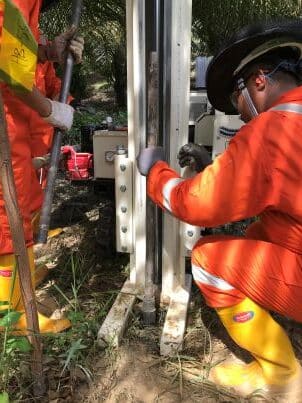
Rokan Block Oilfield | Sumatra, Indonesia
Supported environmental work programs during the transfer of Chevron upstream assets to Pertamina. Designed and led a specialist drilling and sampling initiative, including procurement, importation and deployment of a compact tracked Geoprobe to remote oilfield locations. Trained local drillers in specialised soil coring, improving sample quality, productivity and access to difficult terrain across a large portfolio of sites.
Project experience includes work undertaken by Brendan Brodie during previous employment; not all projects were contracted to EI Australia.
PETROLEUM REMEDIATION • 2016
Lismore Heights Service Station | NSW, Australia
Pedro led field implementation, interpretation and reporting for a petroleum remediation program involving a 21-metre hydraulic barrier and two pneumatic submersible extraction pumps. Site-specific pumping tests demonstrated the limitations of conventional extraction wells, informing the design of a groundwater collection trench. Recovered fluids were treated using LNAPL separation and granular activated carbon. For site safety, fluid transfer and level controls operated entirely on compressed air, without electrical components.
ISCO & HUMAN HEALTH RISK ASSESSMENT • 2022–2023
Petroleum Remediation & Redevelopment | Alexandria, Sydney
EI Australia undertook remediation of petroleum-impacted soil and groundwater at a former underground fuel storage area. Approximately 8,000 litres of alkaline-activated sodium persulfate solution were applied to the exposed groundwater zone following tank removal. A subsequent site-specific Tier 2 human health risk assessment evaluated potential dermal contact with impacted groundwater in the proposed basement and found no unacceptable risk under the assessed exposure conditions.
PFAS WATER TREATMENT TECHNOLOGY
Patent-pending continuous PFAS treatment
EI Australia has developed a patent-pending, in-line continuous water treatment process designed to efficiently remove PFAS from water in addition to concentrated reject brine generated during desalination and remedial activities such as soil-washing.